
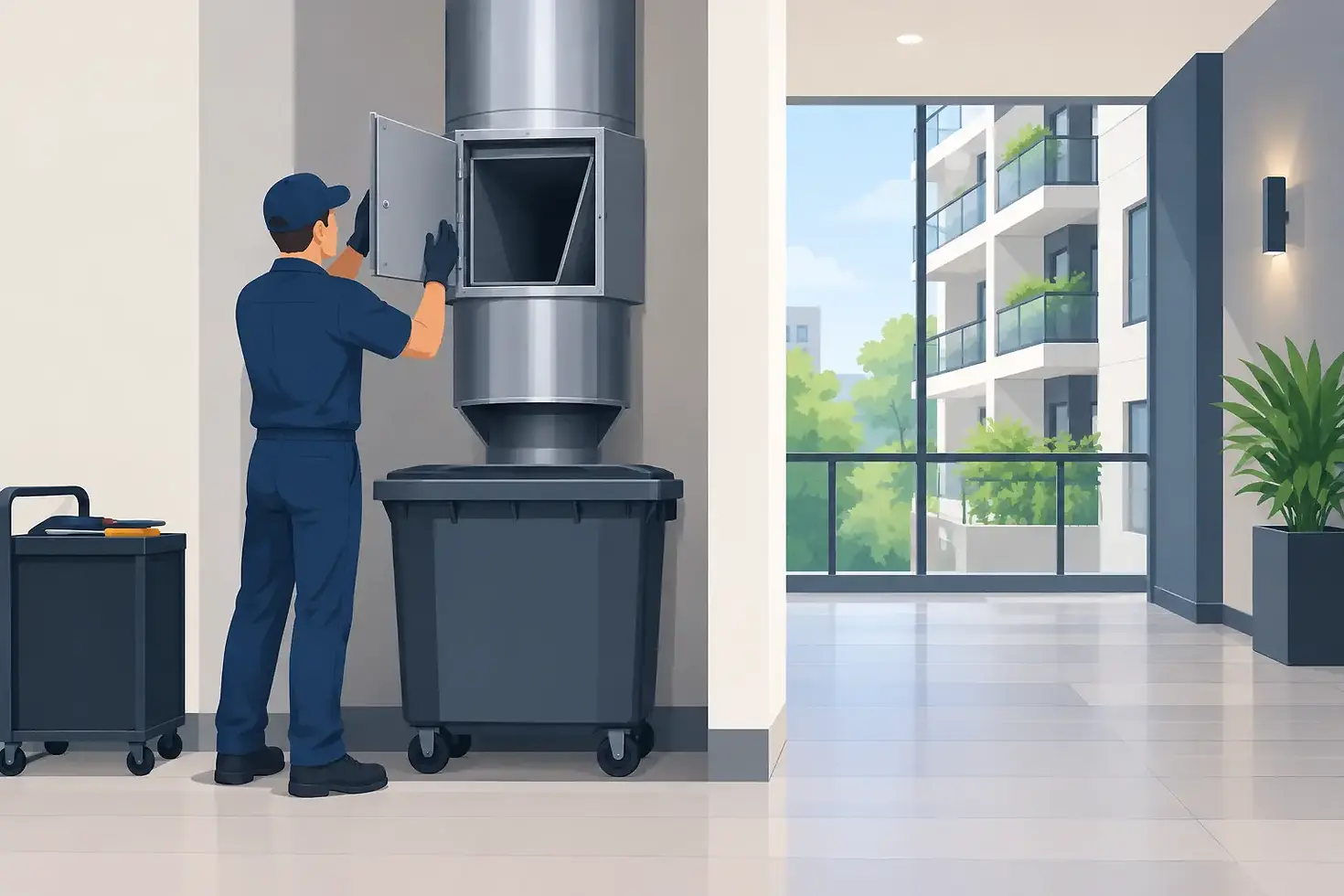
Trash Chutes: A Maintenance Standard for Communities

A trash chute can look clean at the intake door while concealed buildup inside the shaft is already creating odors, pest pressure, and resident complaints. For multifamily communities, condos, and mixed-use properties, trash chutes are not a minor housekeeping detail. They are a high-use building system that needs a defined maintenance standard.
When service is delayed, waste residue accumulates along chute walls, in intake areas, and at the bottom discharge point. The result can be a persistent problem that janitorial attention alone cannot correct. A professional cleaning program gives property managers control over a system residents use every day and helps protect the condition, appearance, and operation of the building.
Why Trash Chutes Demand Proactive Maintenance
Trash chutes handle a combination of bagged household waste, food residue, leaking containers, cardboard, and occasional misuse. Gravity moves the waste down the shaft, but it does not remove the residue left behind. Over time, organic material and moisture adhere to interior surfaces, especially at transition points and near the compactor room or collection area.
Odor is often the first visible sign of a larger maintenance issue. Residents may notice it in hallways, near loading areas, or when opening an intake door. What begins as an intermittent complaint can affect perceptions of building cleanliness, management responsiveness, and overall community quality.
Pest activity is another concern. Food residue and moisture create favorable conditions for insects and rodents, particularly where the chute terminates near trash rooms, compactors, or dumpsters. Cleaning does not replace a qualified pest-control program, but it removes the buildup that can contribute to recurring activity and make pest management less effective.
There is also an operational reason to stay ahead of cleaning. Accumulated debris can interfere with components around intake doors, discharge doors, and compactor connections. Routine service supports a safer, more functional waste-handling area and gives maintenance teams a clearer view of conditions that need repair or adjustment.
What Professional Trash Chute Cleaning Should Address
Effective trash chute cleaning is more than applying deodorizer at the intake doors. A commercial-grade scope should address the full waste path, from upper-floor access points through the shaft and into the lower collection area. The right approach depends on the building layout, chute height, system configuration, access conditions, and whether the property uses a compactor or open collection bins.
A qualified service team begins by assessing the chute system and planning for access, resident impact, and safe work conditions. In occupied properties, scheduling matters. Service should be coordinated to minimize disruption while allowing the crew to properly isolate and clean the system.
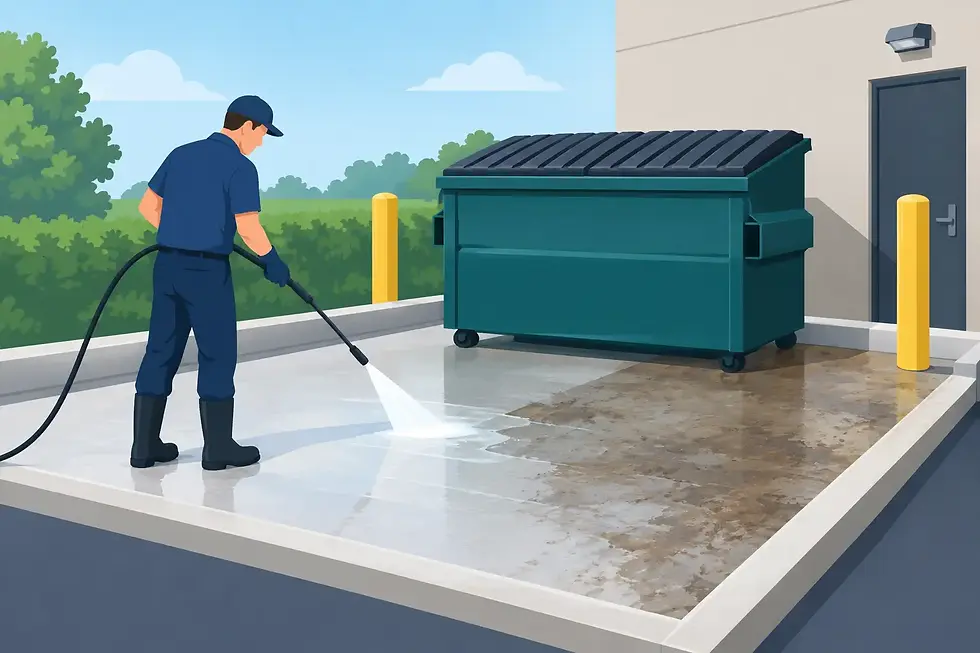
The cleaning process generally involves removing loose debris where accessible, applying appropriate cleaning products, and using specialized equipment to clean interior chute surfaces. High-pressure methods may be appropriate in certain systems, but pressure alone is not the answer. The crew must use a controlled process that accounts for building materials, drainage, equipment rooms, and the possibility of runoff or overspray.
The bottom room deserves equal attention. Chute discharge areas often carry the heaviest concentration of residue because waste collects, compacts, or is transferred there. Floors, walls, doors, surrounding equipment, and nearby collection zones should be evaluated as part of the service scope. Treating only the vertical shaft can leave the source of odor and contamination in place.
Cleaning, Deodorizing, and Disinfecting Are Different Tasks
These terms are often used interchangeably, but they serve different purposes. Cleaning removes visible soil, residue, and buildup. Deodorizing helps reduce unpleasant smells. Disinfecting is intended to reduce certain microorganisms when used according to the product label and under appropriate conditions.
For property managers, the key is not choosing one term over another. It is confirming that the scope matches the condition of the system. A heavily soiled chute may need thorough cleaning before deodorizing or disinfecting products can perform as intended. Products sprayed over buildup can mask a problem temporarily without resolving it.
How Often Should a Property Clean Its Trash Chutes?
There is no single schedule that fits every property. A small condominium with limited waste volume will have different needs than a high-density apartment community with multiple floors, frequent move-ins, and a compactor room operating every day.
Most managed properties benefit from scheduled professional service at least annually, while higher-volume communities may require cleaning every six months or more frequently. The best interval is based on resident count, number of chute doors, waste volume, food-service exposure, climate, existing odor concerns, and the condition of the trash room.
A reliable maintenance partner can help establish a baseline during the first service. If the chute has significant buildup or has not been cleaned recently, the initial project may require a deeper restoration approach. Afterward, a recurring schedule is typically easier to manage, more predictable for budgeting, and less disruptive than waiting for complaints to escalate.
Property teams should also watch for operational triggers that call for service outside the normal schedule. These include persistent odors, increased pest sightings, leaks or staining around intake doors, resident complaints about hallway conditions, visible buildup in the trash room, or a noticeable decline in cleanliness after a period of high occupancy or turnover.
Protecting Residents, Staff, and Building Operations
Trash chute work involves confined access areas, waste exposure, wet surfaces, and building equipment. That makes contractor selection a practical risk-management decision, not just a price comparison. The provider should have a defined work plan, appropriate insurance, trained crews, and the ability to coordinate with on-site staff.
Communication is equally important. Residents need clear notice when chute access will be temporarily unavailable. Maintenance staff need to know how waste will be handled during the service window. For larger communities, it may be necessary to stage alternate collection points or schedule work during lower-use periods.
The strongest results come from coordinated site management. Before service, property staff can inspect for damaged doors, faulty closers, signage issues, blocked access, or bulk items stored near collection areas. After service, teams should confirm that chute doors operate correctly, the trash room is returned to order, and any repair concerns are documented for follow-up.
Common Mistakes That Shorten the Life of a Chute System
The most common mistake is treating trash chute cleaning as a response-only service. By the time odors are traveling into corridors or residents are filing repeated complaints, the buildup is usually established and the property is already managing a visible experience issue.
Another mistake is using a generic cleaning scope without reviewing the entire waste stream. A clean-looking trash room does not mean the shaft is clean, and a deodorized chute door does not mean the lower discharge area is sanitary. Incomplete service can create the appearance of action without delivering a lasting result.
Finally, some properties overlook the connection between resident education and system performance. Clear rules for bagging waste, breaking down boxes, keeping doors closed, and using designated areas for oversized items reduce misuse. These expectations do not eliminate the need for professional cleaning, but they help preserve results between service visits.
A Better Standard for Multifamily and HOA Properties
For HOAs, apartment operators, and commercial property managers, trash chutes should be part of the preventive maintenance calendar alongside pressure washing, gutter cleaning, dryer vent cleaning, and other high-impact building services. This approach creates consistency, supports inspection readiness, and reduces the need for urgent corrective work.
Outdoor Keepers builds customized maintenance scopes for properties that need dependable execution across multiple exterior and building-support service categories. For chute systems, that means assessing the property’s actual conditions, coordinating service carefully, and delivering a thorough result rather than a surface-level treatment.
A clean, properly maintained chute will not draw attention from residents. That is exactly the point. Establish the service schedule before odors, pests, and complaints turn a manageable maintenance task into a property-wide issue.


Comments