
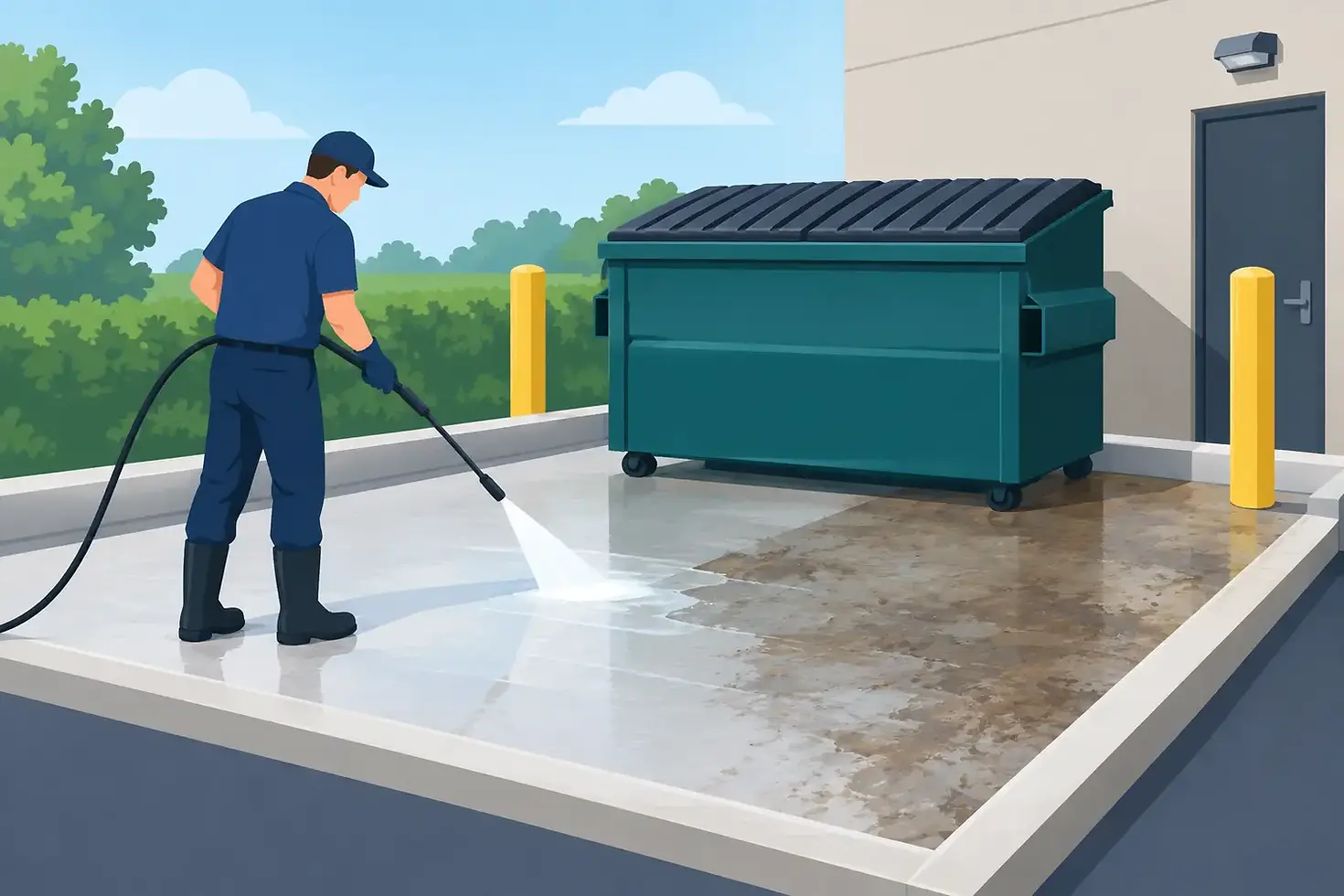
How to Schedule Dumpster Pad Washing Properly

A dumpster enclosure can be the cleanest or weakest part of a property’s maintenance program. When grease, leaking bags, food residue, and windblown debris accumulate, the area quickly creates odor complaints, pest activity, stains, and an unfavorable impression during site walks. To schedule dumpster pad washing effectively, property managers need more than a one-time cleanup. They need a service cadence built around actual waste volume, site conditions, collection days, and inspection expectations.
For multifamily communities, commercial centers, healthcare facilities, and office campuses, dumpster pad washing is preventive maintenance. A properly maintained enclosure supports sanitation, protects concrete and surrounding surfaces, and reduces the likelihood that a resident, tenant, visitor, or inspector encounters an avoidable problem.
Why Dumpster Pads Need a Planned Service Cycle
Dumpster pads are exposed to conditions that standard janitorial service does not address. Trash compactors and bins leak. Restaurant tenants create grease residue. Residents leave bulky items outside enclosures. Liquid waste settles into concrete pores, especially where the pad has cracks, uneven drainage, or aging sealant.
Left untreated, those contaminants do more than look bad. Organic buildup produces persistent odors, can attract rodents and insects, and makes the area harder to restore over time. Grease and grime also create slip hazards near gates, loading areas, and collection access points. For an HOA board or property manager, the issue is often first identified through a complaint, but the source is usually a maintenance gap that has been building for weeks or months.
A defined washing schedule gives the property team control. Instead of reacting after a spill, odor issue, or inspection failure, the site receives cleaning before buildup reaches that point. It also creates a consistent standard across multiple buildings or communities, which matters to REITs and operators managing large portfolios.
How to Schedule Dumpster Pad Washing by Property Type
There is no single frequency that fits every property. A light-use office building with enclosed bins may need quarterly service, while a high-density apartment community with multiple daily trash deposits may need monthly cleaning. The correct scope depends on how the area is used, not simply the number of dumpsters on site.
Multifamily, Condominiums, and HOA Communities
Multifamily properties typically benefit from scheduled washing every 30 to 90 days. Communities with high occupancy, shared trash chutes, frequent move-outs, pet waste concerns, or heavy food waste should be evaluated toward the more frequent end of that range.
Monthly or bi-monthly service is often appropriate where residents deposit trash throughout the day and where enclosures are close to parking, walkways, or residential units. These locations have less tolerance for odor and visual neglect. For smaller communities with controlled access and lower waste volume, quarterly service may be sufficient when paired with consistent porter and trash management practices.
Retail Centers and Restaurants
Retail properties require a closer look at tenant mix. A center with restaurants, grocers, coffee shops, or food preparation businesses will have very different cleaning demands than a professional office complex. Grease, food debris, and liquid spills can accumulate quickly, particularly around shared dumpsters.
For food-service-heavy properties, monthly service is commonly the right starting point. Some sites need more frequent attention during warm weather, peak shopping periods, or when waste collection schedules are limited. A pad that remains clean in winter may require a tighter cycle in summer, when heat accelerates odor and pest activity.
Office, Industrial, and Warehouse Facilities
Office campuses and industrial properties can often operate on a quarterly schedule if waste is primarily dry packaging, paper, or routine business debris. However, loading docks, manufacturing waste, tenant turnover, and outdoor storage can change that calculation.
The best approach is to inspect the site after each service and adjust based on observed buildup. If the pad is consistently clean at 90 days, the interval may be appropriate. If staining and residue return within several weeks, the schedule should be tightened before the problem becomes visible to tenants or visitors.
Build the Schedule Around Site Conditions
Waste volume is only one factor. A reliable dumpster pad washing program accounts for the conditions that make a pad difficult to maintain. The most common variables are drainage, shade, enclosure design, tenant behavior, collection timing, and the condition of the concrete itself.
Pads with poor drainage hold contaminated water after washing or rain. Enclosures with solid walls and limited airflow tend to retain odors. Older concrete absorbs oils and food residue more readily than sealed surfaces. Gates, bollards, walls, and surrounding curbs can also collect grime that makes a freshly cleaned pad still look unfinished if they are excluded from the scope.
Collection timing deserves special attention. Washing immediately before bins are emptied can create access conflicts and leave the contractor working around full containers. In most cases, service should be coordinated shortly after the scheduled waste pickup, when the enclosure is accessible and the interior surfaces can be cleaned thoroughly.
A seasonal review is also practical. In the Bay Area, warm, dry stretches can intensify odors and buildup, while wet conditions may expose drainage issues and carry debris toward stormwater areas. The schedule should respond to those conditions rather than remain fixed just because it was established years ago.
What a Commercial Dumpster Pad Washing Scope Should Include
A commercial-grade service should address more than a quick rinse of the concrete. The work begins with an assessment of the enclosure, visible contamination, access requirements, and drainage path. Technicians should remove loose debris as needed, apply appropriate cleaning solutions for grease and organic residue, and use pressure washing methods suitable for the surface and soil level.
The scope should also include the surfaces that shape the overall condition of the area: pad concrete, interior enclosure walls, gates, curbs, bollards, and the approach immediately outside the enclosure when contamination has migrated. Bins themselves may require separate coordination depending on the waste hauler, ownership, and site requirements.
Wastewater management is a critical part of professional execution. Cleaning runoff should not be allowed to enter storm drains or flow uncontrolled across the property. A qualified provider will assess the site, use containment and recovery methods where required, and handle wastewater in accordance with applicable local requirements. This is one reason dumpster pad washing should not be treated as a basic pressure washing task.
Make Service Easy for On-Site Teams
Even a strong maintenance plan can fail if access is not organized. Before each service, confirm the waste collection schedule, gate codes, parking restrictions, water access, and any tenant communication needed to keep the enclosure clear. If bins must be moved or compactors need to be shut down, define that responsibility in advance.
For larger portfolios, standardizing these details across properties reduces missed service and unnecessary follow-up. A clear work order should identify the enclosure location, approved service window, cleaning scope, wastewater expectations, and reporting requirements. Before-and-after documentation can be especially valuable for HOA boards, asset managers, and regional maintenance teams that need confirmation without being on site.
Outdoor Keepers builds service scopes around these operational details, helping commercial and community properties coordinate exterior maintenance without relying on inconsistent, one-size-fits-all cleaning.
Signs Your Current Schedule Is Too Infrequent
The right schedule should prevent visible problems, not merely address them after complaints arrive. If your team notices recurring odors soon after cleaning, dark staining around bin locations, grease trails outside the enclosure, pest activity, or standing dirty water, the current interval may be too long.
Frequent resident complaints are another clear signal, particularly when dumpsters are located near homes, amenity areas, or pedestrian routes. The same applies when site inspections repeatedly identify the enclosure as a weak point. A clean entry, maintained landscaping, and polished common areas lose credibility when the trash area is visibly neglected.
On the other hand, more frequent washing is not always the answer. If contamination returns quickly because bins are damaged, tenants are overfilling containers, drainage is failing, or collection service is inadequate, those root causes need correction. Washing is most effective when it is part of a broader waste-area maintenance plan.
Set a Standard That Holds Up Between Visits
Dumpster pad washing is a practical way to protect appearance, sanitation, and asset condition, but the value comes from consistency. Establish a starting cadence, review the results after several service cycles, and adjust based on how the property actually performs. A pad that stays clean between visits is not an accident - it is evidence of a maintenance schedule designed for the site.


Comments