

Preventing Slips at Entryways for Properties

A wet entryway can become a liability point in minutes. Rain, irrigation overspray, tracked-in debris, and residue from neglected exterior surfaces all collect at the same transition zone: where residents, tenants, guests, delivery personnel, and staff move from outside to inside. Preventing slips at entryways requires more than placing a mat at the front door. It requires a coordinated maintenance standard that accounts for drainage, cleaning, surface condition, traffic patterns, and rapid response.
For HOAs, multifamily communities, office campuses, retail centers, and institutional properties, entry safety also affects appearance, resident confidence, and inspection readiness. A clean, well-maintained entrance signals that the property is managed with care. A slippery or dirty one suggests missed details elsewhere.
Why Entryways Need a Preventive Maintenance Plan
Entryways are exposed to the conditions that create slips most consistently. Rainwater moves off roofs and hardscape. Wind carries leaves, soil, and litter across walkways. Landscaping crews may leave moisture near paths, while residents bring water and grit indoors on shoes, strollers, carts, and wheels. In the Bay Area, seasonal rain can turn a previously manageable entrance into a recurring maintenance issue.
The risk is rarely caused by one failure alone. A smooth concrete finish may be safe when dry but hazardous when algae, soap residue, or organic buildup is present. A drain may work under normal conditions but overflow when its grate is blocked by leaves. An entry mat may be effective at first, then lose traction when it becomes saturated, curled, or worn.
Property teams get better results when they treat the entryway as a system rather than a single surface. The goal is to control water before it reaches the threshold, remove contaminants from walking surfaces, and identify deterioration before it becomes a resident complaint or incident report.
Assess the Full Entry Approach, Not Just the Door
A proper assessment starts at the point where pedestrians enter the property, not at the lobby door. Walk the approach after rain or irrigation and look for standing water, runoff paths, slick shaded areas, loose gravel, and debris accumulation. Note whether the walkway slopes toward the building and whether downspouts discharge near pedestrian routes.
Drainage is often the first operational issue to address. Catch basins, trench drains, area drains, and grates need routine clearing so water has a place to go. Gutters and downspouts deserve the same attention. When roof drainage is blocked or improperly directed, water may spill over directly onto sidewalks, steps, ramps, or landings. What appears to be an entryway cleaning concern can begin several stories above the ground.
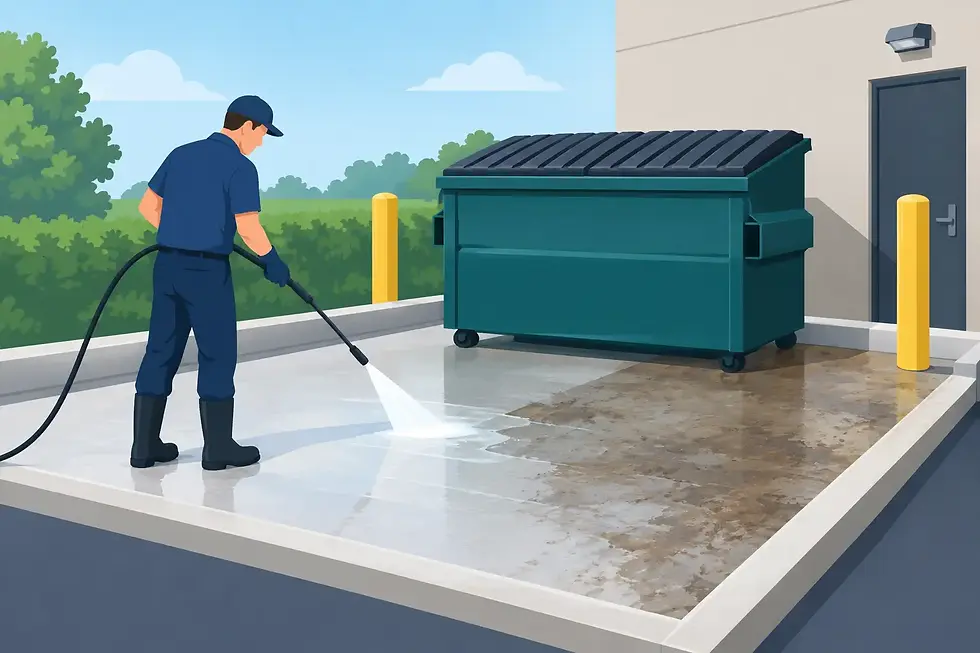
Pay close attention to shaded locations. These areas dry more slowly and are more likely to develop algae, moss, mildew, or biofilm. Pressure washing may be appropriate, but the method matters. Excessive pressure can damage aging concrete, force water into joints, strip coatings, or create uneven-looking results. The right scope considers the surface material, its condition, the type of buildup, water recovery needs, and the level of foot traffic.
Build Cleaning Around Real Conditions
Entryway cleaning should be scheduled according to use and exposure, not a generic calendar. A high-traffic apartment entrance beneath mature trees may need attention far more frequently than a covered office entrance with limited pedestrian activity. Properties with retail tenants, dog-walking traffic, food service nearby, or active loading zones also tend to accumulate residue more quickly.
Routine sweeping removes dry debris before it is ground into the surface or carried indoors. Targeted washing removes the organic buildup and grime that can reduce traction. Glass doors, frames, awnings, and adjacent walls should be included in the visual maintenance plan because streaking and buildup around an entrance undermine the property's overall presentation.
Cleaning teams should also avoid creating a new hazard during service. Work should be timed for low-traffic periods where possible, with clear temporary signage and a process for managing wet surfaces until they dry. A vendor that treats the entrance as an active public space will plan around resident access, deliveries, business hours, and ADA routes rather than simply washing and leaving.
Use Mats and Surface Treatments Strategically
Mats are useful, but they are not a substitute for drainage and cleaning. Their primary role is to capture water and grit before it reaches interior flooring. For commercial and multifamily entries, mats should be large enough to allow several steps, backed to resist movement, and secured flat at all edges. A mat that slides, buckles, or curls can create the exact trip risk it was intended to reduce.
The material should match the environment. Outdoor scraper mats help remove dirt at exposed approaches, while absorbent interior mats manage moisture after the door. In areas with heavy rain exposure, a layered system may be more effective than a single mat. The trade-off is maintenance: more matting means more frequent vacuuming, extraction, replacement, and inspection.
Surface treatments can also help, particularly where smooth tile, sealed concrete, painted coatings, or polished stone are used near an entrance. However, no anti-slip treatment should be selected without confirming compatibility with the existing surface and manufacturer guidance. Some treatments can alter appearance, affect cleaning methods, or require periodic reapplication. Test areas and documented maintenance instructions are worth the effort on premium properties.
Keep Walkways, Steps, and Ramps in Scope
Preventing slips at entryways means managing the routes immediately around them. Steps need visible, durable nosings and secure handrails. Ramps need proper drainage, clean textured surfaces, and clear approaches that do not collect leaves or loose material. Cracks, settlement, damaged coatings, and uneven joints should be documented and routed for repair promptly.
Lighting matters as well. Residents and visitors cannot avoid a puddle, curb edge, or uneven transition they cannot see. Inspect entry lighting during early morning, evening, and storm conditions, not only during a bright daytime walkthrough. Check that fixtures are operating, vegetation is not blocking illumination, and light reaches both the door area and the path leading to it.
Do not overlook secondary entry points. Side doors, garage-to-building connections, pool gates, mailroom entrances, trash room approaches, and employee entries often receive less attention than the main lobby. They can also have less natural surveillance, less frequent cleaning, and more moisture exposure. A consistent property-wide standard prevents these locations from becoming the weak point in the maintenance program.
Assign Ownership and Document the Work
Safety programs lose value when responsibilities are assumed rather than assigned. Property management should establish who inspects entrances, who responds to weather events, who approves repairs, and who verifies vendor completion. Staff should know how to report a concern quickly and how to keep the area safe while service is being arranged.
A simple inspection record provides operational accountability. It should capture the date, location, observed condition, corrective action, and any follow-up required. Photos are especially useful for recurring drainage issues, before-and-after cleaning verification, and repair tracking. For HOA boards and asset managers, this documentation creates a clearer picture of maintenance performance across the portfolio.
Weather response deserves its own plan. When heavy rain is forecast, teams should inspect drains, clear obvious debris, check mats, confirm signage availability, and verify that known trouble spots are addressed. After the event, a second walkthrough can catch sediment, standing water, and overflow damage that was not visible beforehand.
Choose a Vendor That Sees the Whole Property
Entryway safety is connected to several exterior maintenance categories: gutter cleaning, pressure washing, window and awning cleaning, drainage-area cleanup, and recurring site inspections. Coordinating these scopes through one accountable partner can reduce handoffs and make it easier to identify the cause of a problem rather than repeatedly treating the symptom.
Outdoor Keepers approaches commercial exterior maintenance with that wider operating view. A customized scope can account for property traffic, drainage patterns, surface types, seasonal conditions, and the standard of presentation expected by residents, boards, tenants, and ownership groups. The objective is dependable execution that protects both the walking surface and the long-term condition of the property.
A well-run entryway program is visible in the details: clean approaches, dry paths after normal weather events, flat and functional mats, clear drains, maintained lighting, and a team that responds before small issues become larger ones. Give these transition zones the same level of planning as the rest of the asset, and they will support a safer, more polished property experience every day.

Comments