
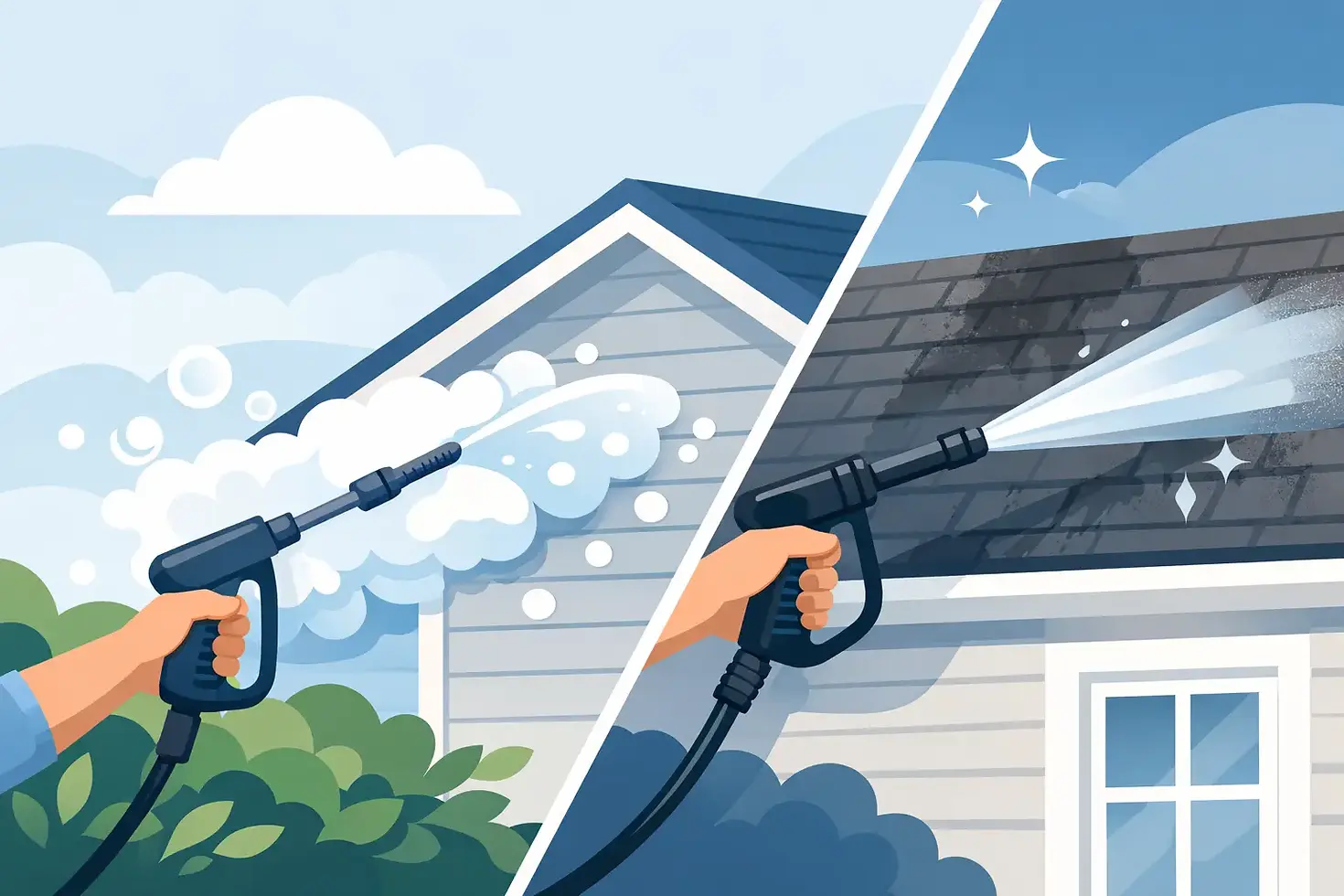
Soft Washing vs Pressure Washing

A clean building exterior should never come at the expense of the surface underneath it. That is the real issue in soft washing vs pressure washing, especially for HOAs, multifamily communities, office campuses, and commercial properties where the wrong method can shorten material life, create liability, and leave managers paying for avoidable repairs.
Property managers rarely need more cleaning vendors. They need a maintenance partner that knows when high pressure is appropriate, when it is not, and how to protect appearance standards without cutting corners. The difference matters because these two methods solve different problems, and using the wrong one can damage roofing, strip paint, scar wood, force water behind cladding, or simply fail to remove the organic growth that keeps coming back.
Soft washing vs pressure washing: what changes?
The simplest distinction is this: pressure washing relies primarily on water force, while soft washing relies primarily on cleaning chemistry, dwell time, and low-pressure rinsing.
Pressure washing uses a strong stream of water to break loose built-up dirt, mud, surface staining, and debris. On the right material, it is efficient and highly effective. On the wrong one, it can be destructive.
Soft washing uses specialized cleaning solutions to kill and remove algae, mildew, mold, bacteria, and other organic contaminants. The water pressure is much lower, which reduces the risk of surface damage. For many exterior surfaces, especially those that are painted, coated, aged, or more delicate, that lower-pressure approach is the safer and more durable choice.
For commercial and HOA environments, the question is not which method is better in general. It is which method is appropriate for the substrate, the stain type, the age of the surface, and the property's operational needs.
Where pressure washing makes sense
Pressure washing is often the right fit for hard, durable surfaces that can tolerate force and benefit from mechanical cleaning. Concrete walkways, curbs, loading areas, parking structures, dumpster pads, some masonry, and certain heavily soiled common areas typically fall into this category.
When grime is mostly surface-level dirt, tire residue, dust accumulation, spilled material, or general buildup from weather and traffic, pressure washing can restore a cleaner appearance quickly. It is especially useful in high-visibility zones where appearance affects first impressions, leasing appeal, or tenant satisfaction.
That said, even concrete is not a one-size-fits-all surface. Older concrete, decorative finishes, patched areas, mortar joints, and surfaces with coatings can all require a more controlled approach. Too much pressure can etch lines into flatwork, leave uneven cleaning marks, and weaken already vulnerable areas.
Commercial-grade results depend on more than turning up PSI. Proper nozzle selection, stand-off distance, water temperature when needed, runoff management, and technician judgment all matter.
Where soft washing is the better choice
Soft washing is generally the preferred method for surfaces that can be damaged by force or where the contamination is biological rather than purely cosmetic. Roofs, stucco, painted siding, vinyl siding, fences, exterior trim, signage, enclosures, and many building facades are better candidates for soft washing.
This matters because algae, mildew, and mold do not just sit on the surface. They root into porous materials and continue growing if they are not treated correctly. High pressure may remove the visible stain for a short time, but it often does not eliminate the organism causing it. That can mean faster regrowth and more frequent cleanings.
Soft washing addresses the source of the contamination. The cleaning solution does the heavy lifting, and the rinse is designed to clear the surface without the force that can crack tiles, dislodge granules, damage sealants, or push water into areas where it does not belong.
For roofing in particular, this distinction is critical. Asphalt shingles, tile roofs, and other roof systems should not be treated like sidewalks. A roof cleaning plan has to protect the roofing material, maintain curb appeal, and support long-term asset preservation.
The real risk in choosing the wrong method
The most expensive cleaning mistake is not always visible the same day. In many cases, the damage shows up later.
On siding, excessive pressure can force water behind panels and create moisture problems. On wood, it can raise fibers, leave gouges, and accelerate deterioration. On painted surfaces, it can strip finishes prematurely. On roofs, it can dislodge protective granules or disturb components that are expensive to repair. On windows, seals and surrounding materials can be affected if cleaning is too aggressive.
There is also an operations issue. On large managed properties, surface damage becomes a broader management problem. Now there are resident complaints, board questions, follow-up vendors, potential claims, and avoidable budget pressure. What should have been preventive maintenance turns into corrective work.
That is why experienced commercial providers assess before they clean. Material condition, previous repairs, access, drainage, surrounding landscaping, and occupancy all shape the right approach.
How to decide between soft washing and pressure washing
For commercial decision-makers, the decision should be based on four factors: surface type, type of buildup, property condition, and desired outcome.
If the surface is dense and structurally durable, pressure washing may be appropriate. If it is coated, aging, brittle, or moisture-sensitive, soft washing is usually the safer option.
If the staining is caused by dirt, sediment, grease, or traffic residue, pressure washing may be enough. If the problem is algae, mold, mildew, or organic discoloration, soft washing is often the better long-term answer because it treats the growth instead of only removing the visible layer.
If the property has deferred maintenance, surface wear, or known vulnerabilities, cleaning should be more conservative. Aggressive methods on compromised materials can expose issues that were already developing.
And if the goal is not just a quick visual improvement but asset preservation, the cleaning plan should favor the method that protects material life while still delivering inspection-ready results.
Soft washing vs pressure washing for common commercial surfaces
Concrete sidewalks and drive lanes usually respond well to pressure washing, though stain severity and finish type matter. Building siding depends on the material. Vinyl, painted siding, and stucco often benefit from soft washing. Brick and block can go either way depending on age, condition, and what is being removed.
Roofs are typically soft washed, not pressure washed. Fences, screens, and decorative exterior elements are often better handled with lower pressure as well. Dumpster pads and service corridors frequently require pressure washing because of the density of the surface and the nature of the buildup.
In mixed-use properties, apartment communities, and HOA-managed sites, one method rarely covers the entire scope. The best service plans combine both techniques where appropriate, rather than forcing every surface into the same process.
Why commercial properties need a tailored approach
A single-family residence and a 200-unit multifamily property do not carry the same cleaning considerations. Large-scale sites have more variables: resident traffic, tenant access, vehicle flow, safety planning, staging, runoff control, scheduling windows, and broader material variation across buildings and common areas.
That is why standardized, one-method-only service is usually a red flag. Commercial properties need a provider that can inspect conditions, define scope correctly, and execute with consistency across different surface types.
At Outdoor Keepers, that kind of assessment-first approach is central to protecting appearance and preserving assets across complex properties. The goal is not just to make surfaces look better for a week. It is to support long-term condition, reduce preventable damage, and keep communities and commercial sites looking professionally maintained.
What property managers should ask before approving service
Before authorizing exterior cleaning, ask what method will be used on each surface and why. Ask whether the staining is organic or non-organic. Ask how the provider will protect surrounding landscaping, control overspray, and avoid damage to coatings, seals, and adjacent materials.
It also makes sense to ask how the work will be staged around occupants and daily operations. For HOAs and multifamily communities, this is not a minor detail. A technically correct cleaning method still creates friction if execution is disorganized.
The right provider should be able to explain the trade-offs clearly. Sometimes pressure washing is faster and appropriate. Sometimes soft washing takes more planning but protects a more valuable surface. In many cases, the best answer is a combination of both.
Clean exteriors improve curb appeal, support inspections, and protect the reputation of the property. The method behind that result matters just as much as the result itself, because the best maintenance work is the kind that improves what people see without damaging what they own.


Comments