
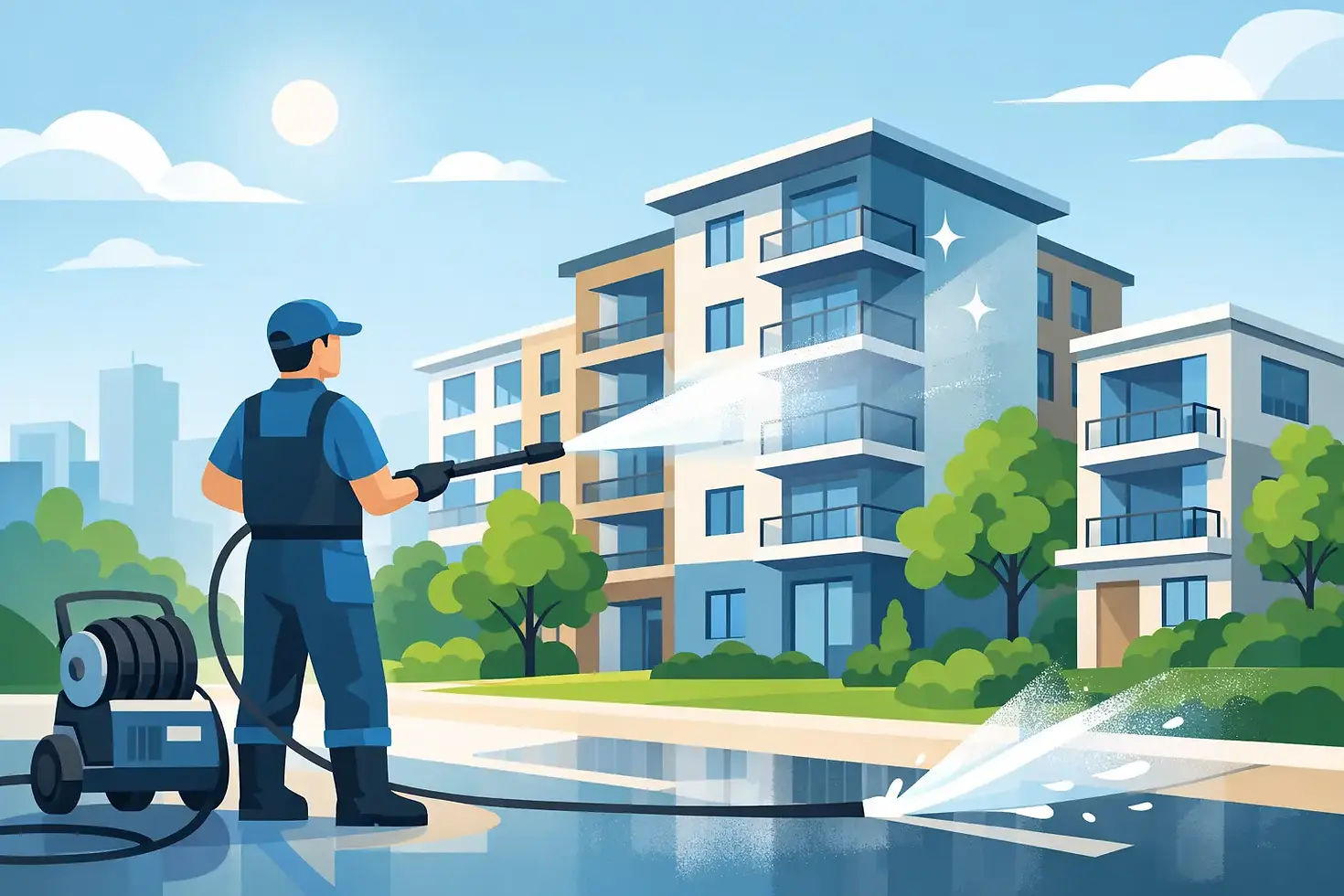
Pressure Washing Apartment Complexes Right

A stained breezeway, algae on retaining walls, and dark runoff marks below balconies do more than hurt curb appeal. They signal deferred maintenance to residents, prospects, board members, and ownership groups. Pressure washing apartment complexes is not just a cosmetic service - it is a visible part of protecting the asset, reducing slip risks, and keeping the property inspection-ready.
Why pressure washing apartment complexes matters
Multifamily properties collect grime fast. Foot traffic, vehicle exhaust, irrigation overspray, tree debris, mildew, cobwebs, grease near dumpster pads, and airborne pollutants all build up across siding, sidewalks, parking areas, stairwells, and common spaces. On a single-family home, that buildup is easier to manage. On a large apartment community, it compounds across dozens of surfaces and hundreds of touchpoints.
For property managers, the issue is operational as much as visual. Residents notice dirty walkways and entry areas immediately. Prospects form an opinion before they ever step into a leasing office or model unit. HOA boards and ownership groups look for signs that routine care is being handled professionally. A clean exterior supports occupancy goals, preserves property standards, and reflects well on site management.
There is also a practical maintenance angle. Organic growth and embedded dirt can shorten the life of paint, coatings, concrete, and other exterior materials. Regular washing helps remove contaminants before they cause deeper staining or surface deterioration. That does not mean every area needs the same treatment or frequency. It means the service should be scoped with the property’s materials, exposure, and traffic patterns in mind.
What should be included in pressure washing apartment complexes
The best results come from treating the property as a system, not as a few isolated dirty spots. A comprehensive scope often includes sidewalks, breezeways, building exteriors, stairwells, curbs, dumpster enclosures, pool decks, retaining walls, parking garages, entry monuments, and other common-area surfaces. In many communities, pressure washing also supports related services such as gutter cleaning, roof cleaning, or window cleaning so the property looks consistently maintained instead of partially addressed.
This is where many vendors fall short. They clean the obvious areas and miss the transition points that residents see every day - handrails, corners, stair landings, under-eave cobweb buildup, splash zones, and shaded sections where mildew returns first. For apartment complexes, surface cleaning needs to be thorough and organized. Missed details create uneven results and lead to callbacks, complaints, and repeat mobilization costs.
A professional assessment should account for material type, water access, drainage, resident flow, safety controls, and whether hot water, detergents, soft washing, or lower-pressure cleaning methods are needed. Concrete can usually handle more aggressive treatment than painted stucco or aged wood trim. The right method depends on the surface.
Pressure washing vs soft washing in multifamily settings
Not every exterior surface should be cleaned with high pressure. This is one of the most common misunderstandings in the field. Apartment communities often include stucco, EIFS, painted siding, vinyl fencing, composite materials, signage, and coated surfaces that can be damaged by the wrong approach.
Pressure washing is effective for durable hardscapes such as sidewalks, dumpster pads, concrete walls, and certain parking areas where deep surface contamination needs to be removed. Soft washing is a better fit for more delicate materials or for areas where organic growth needs to be treated without forcing water behind finishes. In practice, most apartment complex cleaning programs use a combination of both.
For property managers, the takeaway is simple. The question is not whether a vendor owns a pressure washer. The question is whether they know when not to use full pressure. A reliable commercial partner adjusts the process to the property instead of forcing the same method everywhere.
The operational side of pressure washing apartment complexes
On occupied properties, execution matters as much as cleaning quality. Residents still need access to buildings, vehicles still need to move, and on-site teams still need to manage the day. A poorly organized wash project can create disruption, safety issues, and resident frustration even if the surfaces end up clean.
That is why planning should cover more than the work itself. Scheduling, access control, staging, water management, communication notices, and sequencing all affect the outcome. High-traffic walkways may need off-hours service. Parking structures may require phased closures. Pool decks and common amenities often need coordination around community use. Dumpster areas may need timing around waste pickup.
The most effective projects are phased clearly, communicated in advance, and performed with commercial discipline. That means crews show up on schedule, protect adjacent surfaces, manage runoff responsibly, and leave areas ready to reopen quickly. For larger communities, a site map and priority-based scope can help ownership and management align on where to focus budget first if a full-property wash is not the immediate plan.
How often should apartment complexes be washed?
There is no universal schedule, because exposure conditions vary widely. A shaded property with heavy tree cover and irrigation overspray may need more frequent cleaning than a newer community with less landscaping and better drainage. Buildings near busy roads may collect more airborne residue. Dumpster areas, breezeways, and entry paths almost always need attention sooner than less visible perimeter sections.
In most multifamily environments, annual service is a strong baseline for broad exterior cleaning, with higher-use or higher-risk areas addressed more often. Some properties benefit from quarterly touch-ups on dumpster pads, walkways, stairwells, or amenity zones while reserving full-building washing for a larger annual maintenance cycle.
The right cadence should match the property’s standards, tenant expectations, and inspection demands. If a community is preparing for board review, investor visits, leasing season, or insurance-related site scrutiny, timing matters. Preventive maintenance works best before visible buildup becomes a management problem.
What property managers should look for in a vendor
For apartment communities, low-price bids often become high-friction projects. The risk is not only poor cleaning. It is incomplete scope, surface damage, missed schedules, weak communication, and crews that are not equipped for large occupied sites.
A qualified provider should be licensed and insured, experienced with multifamily and HOA environments, and capable of tailoring the cleaning plan to the site. They should understand commercial access issues, resident communication requirements, and the difference between a quick wash and a maintenance-grade result. They should also be prepared to identify related exterior care issues that affect appearance and long-term condition, from clogged gutters to staining caused by roof runoff.
It also helps when one provider can coordinate multiple exterior services under a single maintenance plan. That reduces vendor overlap, simplifies scheduling, and gives management teams a clearer line of accountability. For many properties, that is the difference between reactive cleanup and organized asset care.
Common problem areas that deserve special attention
Some sections of an apartment complex consistently create the biggest visual and maintenance headaches. Breezeways and stairwells collect constant traffic soil and often trap moisture. Dumpster enclosures build up grease, residue, and odors. Ground-floor siding can discolor from irrigation and landscaping. Pool decks and amenity spaces need cleaning that balances appearance with user safety. Parking garages and loading areas may require degreasing rather than standard washing.
These areas should not be treated as afterthoughts. They are often the places residents judge first, and they can become liability concerns if neglected. A well-scoped service plan prioritizes these zones instead of spreading effort evenly across areas with very different needs.
A smarter way to protect the asset
Pressure washing apartment complexes works best when it is part of a broader preventive maintenance strategy, not a last-minute fix before complaints escalate. Clean exteriors support leasing, reinforce management standards, and help protect the surfaces you already budget to maintain. They also send a clear message that the property is being managed with care.
For multifamily operators who want dependable results, the real value is not just cleaner concrete or brighter walls. It is having a commercial maintenance partner who can assess the site accurately, execute without shortcuts, and keep the property ready for residents, inspections, and ownership expectations. That is the standard Outdoor Keepers is built to deliver.
The next time exterior buildup starts to show, it is worth asking a better question than how cheaply the job can be done. Ask how well the property can be protected while the work gets done right.


Comments