
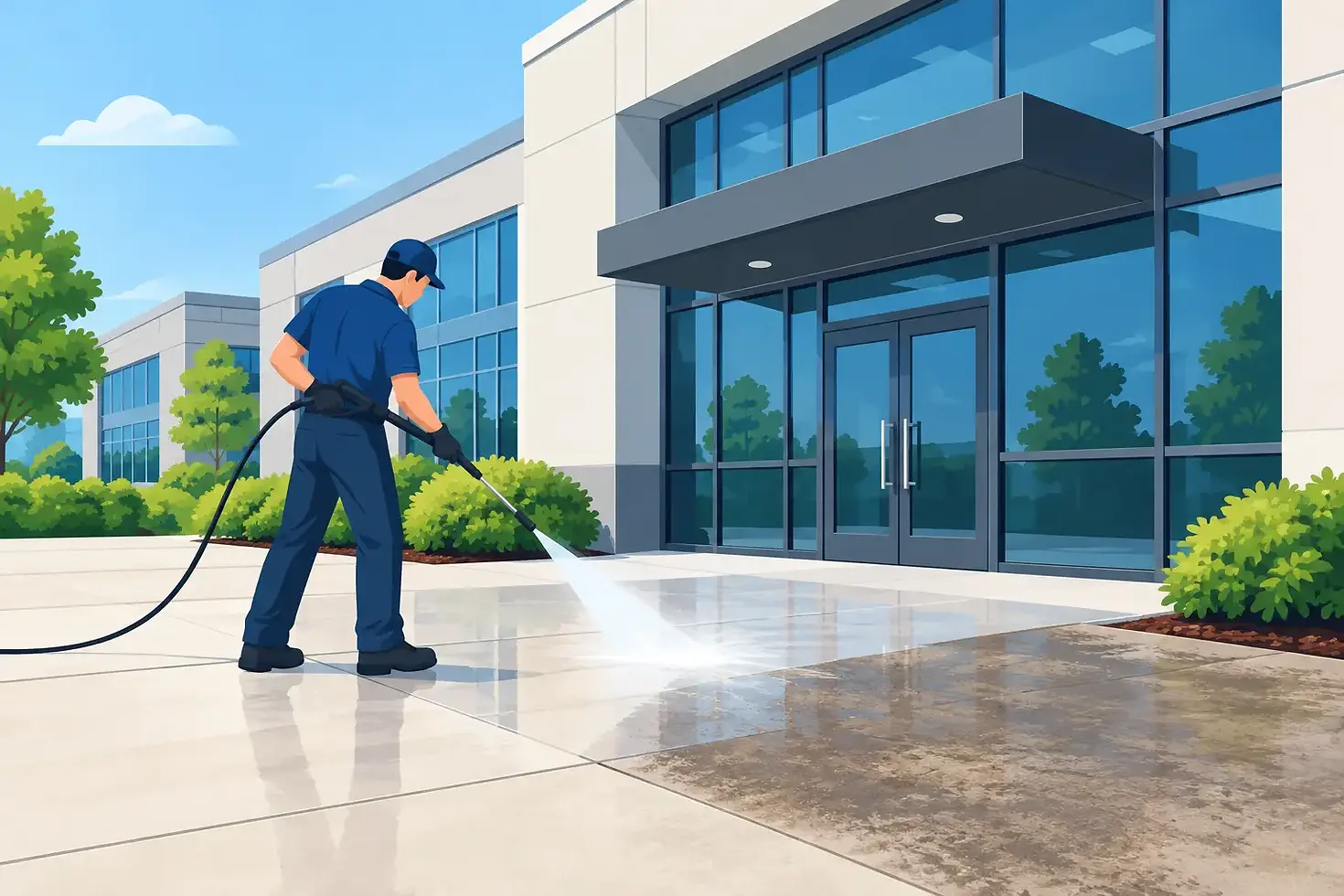
Pressure Washing for Commercial Property Care

A stained entry walk, algae-covered breezeway, or oil-marked loading area can change how residents, tenants, visitors, and inspectors judge a property before they enter the building. Commercial [pressure washing](https://www.outdoorkeepers.com/copy-of-pressure-washing) is not a cosmetic afterthought. When it is planned correctly, it is a practical part of preventive maintenance that protects surfaces, improves safety, and keeps large properties ready for daily use and scheduled inspections.
For property managers, HOA boards, and facility teams, the challenge is rarely deciding whether a site needs cleaning. The real challenge is defining the right scope, scheduling work with minimal disruption, and choosing a provider that can complete the work consistently across an entire portfolio.
What Commercial Pressure Washing Should Accomplish
Commercial exterior cleaning should produce more than a temporary visual improvement. A well-managed pressure washing program removes the buildup that accelerates surface wear and creates hazards in high-traffic areas. That includes algae, mildew, moss, dirt, food residue, gum, vehicle fluid stains, tire marks, and other contaminants that ordinary janitorial work cannot address.
On multifamily and HOA properties, the highest-priority areas are often common walkways, stairwells, breezeways, pool decks, dumpster pads, retaining walls, curbs, entry areas, and parking structures. Commercial campuses may need attention around loading docks, storefronts, pedestrian corridors, exterior dining areas, service yards, and building entrances. Each area has a different level of traffic, staining, drainage, and material sensitivity.
The goal is a cleaner, safer, more consistent property standard. That matters when preparing for HOA inspections, leasing tours, board walk-throughs, lender visits, and routine site evaluations. It also helps maintenance teams stay ahead of the gradual decline that becomes more expensive to correct once staining and organic growth are deeply established.
Pressure Washing Is Not the Same on Every Surface
The term pressure washing can suggest that more force always produces better results. On commercial properties, that approach can create avoidable damage. Concrete, pavers, stucco, painted surfaces, composite decking, natural stone, tile, metal fixtures, and wood each require a different combination of pressure, water temperature, cleaning solution, dwell time, and rinsing technique.
Concrete sidewalks and parking areas may tolerate higher pressure when treated by trained technicians using commercial-grade equipment. Even then, the work must be controlled. Inconsistent passes can leave visible striping, while excessive force can damage aging concrete, loosen joint material, or drive contaminants into porous surfaces.
Soft washing is often the better choice for more delicate materials and vertical exterior surfaces. This lower-pressure method relies on properly selected cleaning solutions to break down organic growth before rinsing. It is especially useful for areas where high pressure could damage paint, force water behind siding, scar stucco, or disturb seals and finishes.
A professional assessment should determine the method before crews arrive. The right question is not, “How much pressure can this surface take?” It is, “What process will remove the contamination while preserving the material?”
Prioritize Areas That Affect Safety and Operations
Every managed property has surfaces that deserve attention first. A comprehensive scope begins with risk, traffic, and visibility rather than treating every square foot as equal.
Entryways and primary pedestrian paths usually belong at the top of the list because they shape first impressions and can become slippery when algae or mildew develops. Stairways, ramps, pool perimeters, and shaded walkways also require close attention. These areas may retain moisture longer and create elevated slip-and-fall concerns.
Dumpster enclosures and trash areas need a different standard. Grease, leaking bags, beverage residue, and organic waste can produce odors, attract pests, and create persistent stains. Pressure washing can improve conditions, but results depend on proper degreasing, wastewater management, and recurring service intervals. One cleaning will not solve an ongoing operational issue if waste handling practices remain inconsistent.
Parking garages, loading zones, and drive lanes often require targeted treatment for oil spots, tire marks, and accumulated grime. These areas should be evaluated with drainage and runoff in mind. The job is not complete if contaminants are simply moved into nearby landscape areas or storm drains.
Build the Scope Around Your Property, Not a Generic Checklist
A large apartment community, office campus, retail center, and healthcare facility should not receive the same pressure washing proposal. Their usage patterns, access requirements, resident expectations, and compliance considerations are different.
Before work begins, a dependable provider should identify the surfaces to be cleaned, stain conditions, access limitations, water availability, drainage points, landscaping exposure, and preferred work hours. The scope should also clarify whether crews will move furniture, cones, planters, or other obstructions, and how they will protect nearby doors, windows, electrical components, and landscaping.
Timing matters as much as technique. A residential community may need early-morning scheduling to minimize resident disruption. A retail property may require overnight or off-hours service to keep storefronts accessible. Healthcare, manufacturing, and warehouse facilities often have stricter access controls and operational windows that must be coordinated in advance.
For recurring maintenance, service frequency depends on shade, moisture, tree coverage, tenant activity, local weather, and the type of surface. Heavily shaded walkways may need more frequent service than open concrete pads. Dumpster areas may need scheduled cleaning several times a year, while building perimeters may perform well on an annual or semiannual program. A reliable plan reflects actual site conditions instead of selling unnecessary frequency.
Protect Drainage, Landscaping, and Surrounding Assets
Commercial pressure washing requires more than equipment and labor. Responsible execution includes control of water, cleaning products, debris, and runoff. This is particularly important on sites with storm drains, landscaped medians, water-sensitive hardscapes, or neighboring occupied spaces.
Crews should evaluate drainage before cleaning begins and use appropriate containment or recovery methods where needed. Leaves, litter, loose gravel, and heavy debris should be removed before washing so they do not clog drains or spread across the property. Cleaning solutions must be appropriate for the surface and applied with care around vegetation and adjacent materials.
Property managers should also expect a clear plan for traffic control. Wet surfaces, hoses, equipment, and active work zones create hazards when they are not managed properly. Cones, signage, cordoned areas, and coordinated sequencing help keep residents, employees, customers, and vendors moving safely through the property.
What to Expect From a Commercial Cleaning Partner
Commercial sites need accountable execution, not a crew that arrives with a trailer and an undefined plan. Look for a provider that can assess the property, document the service area, communicate scheduling requirements, carry appropriate licensing and insurance, and complete the agreed scope without leaving details behind.
Quality control is especially important on larger properties. The finished work should be reviewed for missed sections, uneven cleaning, residual debris, and areas that require spot treatment. For managers overseeing multiple buildings or communities, consistent documentation and responsive communication make vendor coordination easier.
Outdoor Keepers approaches pressure washing as part of a broader exterior maintenance strategy. That allows property teams to coordinate related needs such as gutter cleaning, window cleaning, roof cleaning, and trash chute cleaning through one organized maintenance partner rather than managing disconnected vendors.
Price should be evaluated in context. The lowest bid may omit surface preparation, degreasing, protection measures, runoff controls, or post-service cleanup. A detailed scope provides a more useful comparison because it shows what is actually included, how the work will be performed, and what standard the provider is responsible for meeting.
Keep Pressure Washing on the Maintenance Calendar
Waiting until surfaces look severely neglected usually increases cost and limits scheduling flexibility. By that point, stains may be more difficult to remove, organic growth may have spread to broader areas, and a pending inspection or event may create unnecessary urgency.
A planned pressure washing schedule gives property teams better control. It supports a cleaner appearance year-round, helps identify recurring problem areas, and makes exterior upkeep easier to budget. More importantly, it reinforces the standard residents, tenants, and visitors should experience every time they arrive: a property that is actively maintained, professionally managed, and ready for what comes next.


Comments