
Best Building Wash Solutions for Commercial Sites

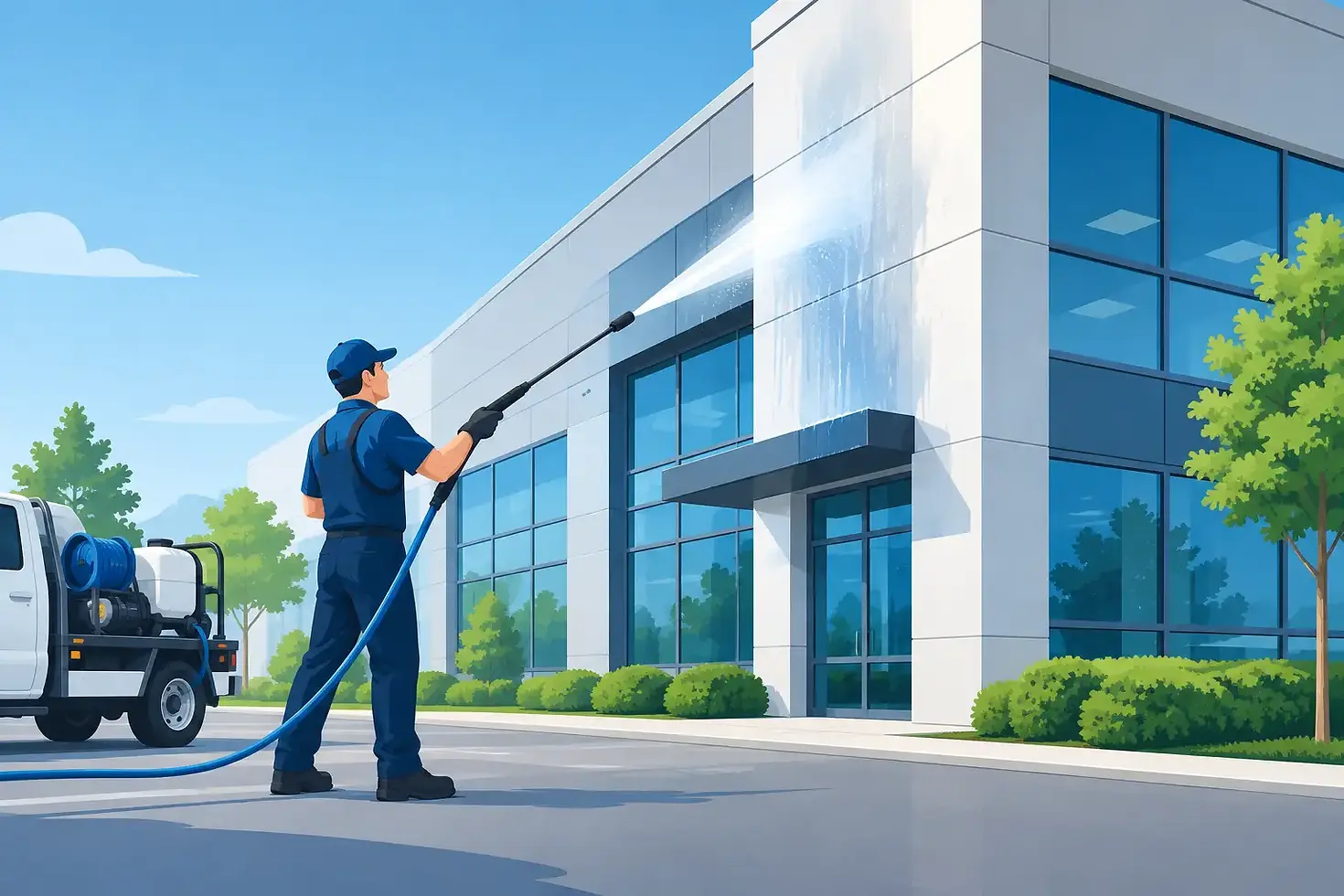
A building can look neglected long before it is structurally compromised. Traffic film collects along entry elevations, algae darkens shaded walls, mineral deposits form beneath windows, and gum or oil stains make common areas feel poorly managed. For commercial property teams, the best building wash solutions are not simply the strongest cleaning methods. They are the methods matched to each surface, contaminant, access condition, and operational requirement.
A poorly scoped wash can damage paint, drive water into wall systems, scar delicate masonry, or disrupt tenants. A properly managed program protects exterior materials while restoring the clean, inspection-ready appearance that residents, customers, board members, and prospective tenants notice immediately.
What Makes a Building Wash Solution the Right One?
Commercial building washing starts with an assessment, not a pressure setting. The correct process depends on the facade material, the type and extent of soiling, landscaping and pedestrian exposure, drainage, water access, and whether the work must occur around occupied spaces.
For a multifamily community, the priority may be removing algae from siding and breezeway walls without disturbing residents or overspraying landscaping. For a retail center, the priority may be cleaning storefront exteriors, sidewalks, and loading areas before business hours. An office campus may require controlled access planning for upper-story facades and a coordinated scope that includes windows, gutters, and walkways.
The strongest service providers build the washing method around the property rather than treating every exterior as a high-pressure cleaning job. That approach delivers a more consistent appearance and reduces avoidable risk.
Best Building Wash Solutions by Surface and Condition
Soft Washing for Painted, Delicate, and Organic-Stained Exteriors
Soft washing uses low-pressure water with professional-grade cleaning solutions to break down organic growth, dirt, pollen, and atmospheric residue. It is often the preferred option for painted stucco, vinyl siding, fiber cement, EIFS, trim, awnings, and other surfaces that can be damaged by aggressive pressure.
This method is especially effective on north-facing elevations, shaded courtyards, and moisture-prone walls where algae, mildew, and lichen return over time. The cleaning solution does the primary work, while low pressure rinses away residue without stripping paint or forcing water behind siding.
Soft washing is not a substitute for pressure cleaning on every surface. Deeply stained concrete, grease-affected loading areas, and gum-covered sidewalks generally need more mechanical action. But for facade preservation, it is often the safer and more durable starting point.
Controlled Pressure Washing for Concrete, Masonry, and Hardscape
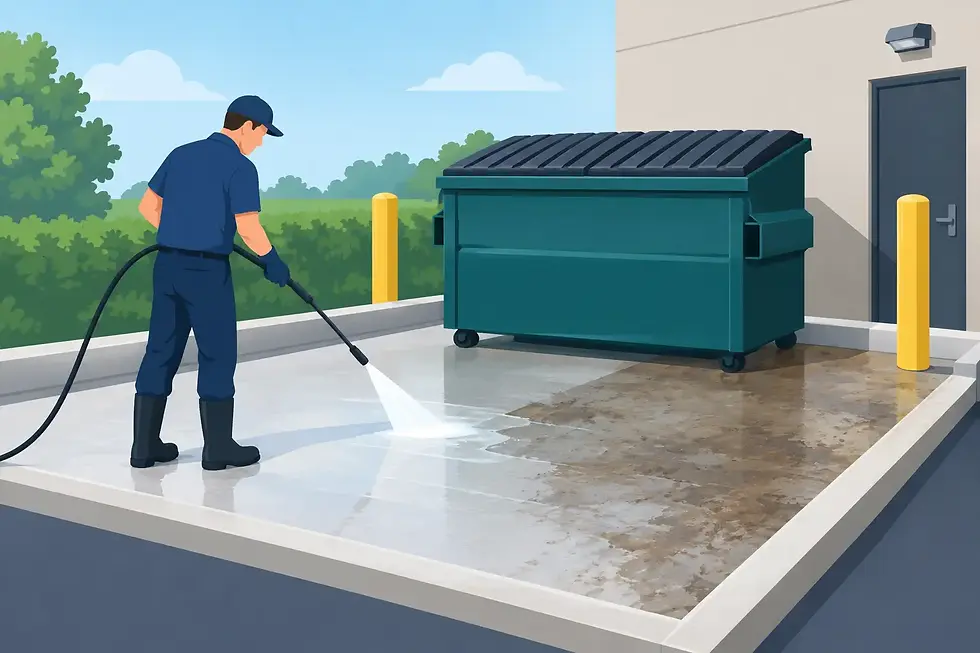
Pressure washing is appropriate when a durable surface needs stronger cleaning power. Sidewalks, parking structures, dumpster pads, retaining walls, breezeways, block walls, concrete entries, and some brick surfaces can benefit from carefully calibrated pressure washing.
The key word is controlled. Water pressure, nozzle selection, distance, temperature, cleaning agent, and dwell time must be adjusted to the material and stain. A concrete walkway may tolerate a higher-pressure treatment than a painted masonry wall. Brick and mortar require particular care, especially on older buildings where weakened joints or prior repairs may be present.
For high-traffic commercial areas, hot-water pressure washing can improve results on oil, grease, food residue, and stubborn gum. It is a practical choice for restaurant-adjacent walkways, service corridors, trash enclosures, and loading zones. Proper containment and wastewater management are part of the scope, not an afterthought.
Low-Pressure Rinsing for Stucco and EIFS
Stucco and EIFS systems can retain dust, soot, algae, and runoff staining, yet both require a cautious approach. High pressure can erode a textured finish, open hairline cracks, or force moisture into vulnerable areas. In the case of EIFS, improper washing can create more serious moisture concerns behind the finish.
A low-pressure wash paired with compatible cleaners is generally the preferred method. Before work begins, the team should identify visible cracking, failed sealant, loose material, and areas of water intrusion. Cleaning will improve appearance, but it should not be used to conceal conditions that need repair.
Specialty Treatments for Rust, Efflorescence, and Mineral Stains
Not every stain is dirt. Rust streaks below railings or metal fixtures, white efflorescence on masonry, irrigation overspray, and hard-water deposits need targeted treatment. Using standard pressure washing alone can leave the discoloration in place or worsen the appearance by creating uneven clean spots.
Specialty cleaners can address these conditions, but the source matters. Rust may point to deteriorating metal components. Efflorescence can indicate moisture moving through masonry. Irrigation stains may return if sprinkler heads continue to hit the building. The best result combines cleaning with a recommendation to correct the underlying cause.
Window, Gutter, and Roof-Adjacent Cleaning as One Coordinated Scope
Building washing is more effective when related exterior maintenance is planned together. Dirty gutters can overflow and create recurring streaks down walls. Roof debris and clogged drainage can encourage algae and moisture near upper elevations. Neglected windows can make a freshly cleaned facade still look unfinished.
For managed properties, combining exterior washing with gutter cleaning, window cleaning, roof cleaning, or solar panel cleaning can reduce scheduling friction and help ensure the entire property presents consistently. It also gives managers one accountable partner coordinating site access, safety requirements, resident communication, and quality control.
How to Choose a Commercial Building Wash Provider
Price matters, but a low bid without a clear method can become expensive quickly. Commercial stakeholders should expect a provider to explain how the building will be cleaned, which materials need special handling, and how the crew will protect the site.
A credible scope should address surface types, cleaning methods, access equipment, water supply, chemical use, plant and property protection, wastewater handling, scheduling, and post-service inspection. It should also identify exclusions or areas that require repairs before cleaning. Vague proposals that promise to “pressure wash the building” leave too much room for inconsistent execution.
Insurance and commercial experience also matter. Large-scale properties involve residents, customers, vehicles, landscaping, pedestrian routes, and operating businesses. The provider should be licensed and insured, able to work around occupied conditions, and prepared to communicate clearly before, during, and after service.
Outdoor Keepers approaches exterior cleaning as part of a preventive maintenance plan, not a one-time cosmetic task. That means evaluating the property’s materials and conditions, tailoring the service scope, and delivering work that supports long-term curb appeal and inspection readiness.
Frequency Depends on Exposure, Not a Calendar Reminder
Many properties benefit from annual building washing, but the ideal frequency varies. Buildings near busy roads, construction activity, mature trees, coastal air, or heavy shade often need more frequent attention. Properties with light exposure and low environmental buildup may maintain their appearance on a longer cycle.
In the Bay Area, microclimates can change the answer from one neighborhood to the next. A shaded apartment community with irrigation overspray may develop algae faster than a nearby office property exposed to sun and wind. Reviewing the exterior at least twice a year helps managers identify early buildup before it becomes a larger cleaning project.
A recurring plan also supports more predictable budgeting. Instead of waiting for board complaints, leasing concerns, or an upcoming inspection to trigger emergency cleaning, teams can schedule service around seasonal conditions and high-visibility events.
Protecting Operations During Building Washing
A clean facade should never come at the expense of site safety or business continuity. For commercial properties, the work plan should account for pedestrian control, vehicle access, resident notices, storefront operations, protected landscaping, and designated work zones.
Early-morning or off-peak scheduling may be appropriate for retail and office properties. Multifamily communities may need advance resident communication, parking coordination, and staged work by building. Healthcare, schools, and industrial facilities can require more detailed access and safety protocols.
The difference between a basic cleaning crew and a reliable maintenance partner is often visible in these details. Organized crews protect adjacent surfaces, manage overspray, keep common areas orderly, and perform a final walkthrough so missed sections, runoff residue, and access-related issues are addressed before the project is closed.
The right building wash program should make the property easier to manage, not create another vendor problem. Start with a condition assessment, choose methods that respect the building materials, and set a service schedule based on the site’s actual exposure. Clean, well-maintained exteriors send a clear message that the property is actively cared for - and that message carries value long after the wash crew has left.


Comments