

How to Clean Parking Garages Without Cutting Corners

A parking garage can look acceptable from a distance while hiding the issues that create complaints, damage surfaces, and complicate inspections. Knowing how to clean parking garages means more than running a pressure washer across the concrete. It requires a controlled plan for traffic, drainage, waste capture, specialty stains, and the building systems that keep the structure safe.
For property managers, HOAs, and commercial operators, garage cleaning is preventive maintenance. Done correctly, it improves curb appeal, reduces slip hazards, protects concrete and coatings, and gives your team a clearer view of leaks, spalling, failing striping, and drainage problems before they become larger capital expenses.
Start With a Site-Specific Garage Assessment
No two garages should receive the same cleaning scope. A covered residential structure with decorative coatings has different needs from a high-traffic retail deck, warehouse parking area, or medical campus garage. Before scheduling work, inspect every level, stairwell, ramp, entry lane, pedestrian path, loading area, and mechanical room connection.
Document the condition of the concrete, expansion joints, drains, trench drains, catch basins, striping, wheel stops, bollards, walls, lighting fixtures, and garage doors. Identify active leaks, standing water, oil accumulation, tire marks, graffiti, bird droppings, trash buildup, and efflorescence. This assessment separates cosmetic cleaning needs from conditions that require repair or specialty treatment.
Pay particular attention to drainage. Water and cleaning solution should never be allowed to carry oil, sediment, or debris into storm drains. Depending on the property and local requirements, the work may require drain protection, vacuum recovery, wastewater containment, or approved disposal procedures. A cleaning plan that ignores water management can create a compliance issue instead of solving a maintenance problem.
Plan Traffic Control Before Equipment Arrives
Parking garage cleaning affects residents, tenants, employees, customers, delivery drivers, and emergency access. The most thorough cleaning program will still frustrate stakeholders if vehicles are trapped, signage is unclear, or access routes are blocked without notice.
Build the work around occupancy patterns. Many multifamily properties benefit from level-by-level cleaning with advance notices and temporary relocation instructions. Commercial facilities may need overnight, weekend, or phased service that keeps a defined number of spaces open. Healthcare, hospitality, and mixed-use properties often require more detailed coordination because they cannot fully close critical parking areas.
The work area should be clearly marked with cones, barricades, caution signage, and staff direction where appropriate. Ramps and entrances need special attention because wet concrete, active hoses, and equipment movement can create immediate hazards. A professional crew should also maintain emergency vehicle access throughout the project.
Use the Right Method for Each Surface and Soil Type
A garage contains more than bare concrete. Using one pressure setting and one chemical across every surface is how coatings become damaged, paint is stripped, and stains remain behind. The correct method depends on the surface condition, the type of soil, and the garage's drainage and recovery capabilities.
Dry debris should be removed first. Commercial sweeping and vacuuming clear leaves, trash, gravel, broken glass, and loose sediment that would otherwise turn into abrasive slurry during washing. This step also gives technicians access to drains and reveals stains that need targeted pretreatment.
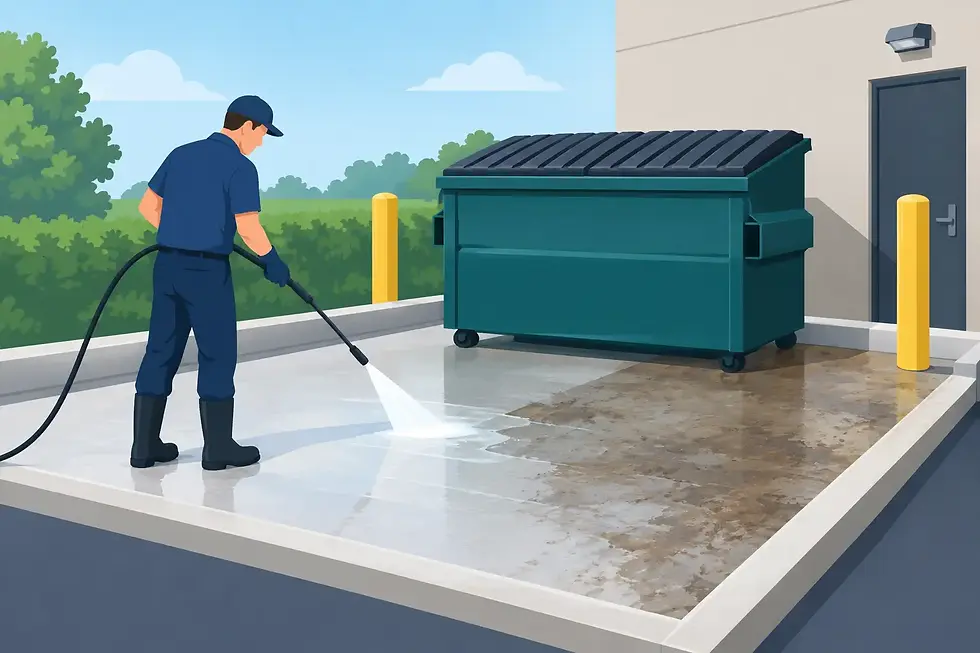
Pressure washing is highly effective for embedded dirt, road film, salt residue, tire marks, and general buildup. However, pressure must be calibrated for the surface. Excessive pressure can etch concrete, damage sealants, lift coatings, and force water into joints or wall openings. Heated water can improve results on greasy surfaces, but it should be used with appropriate recovery and runoff controls.
For coated decks, painted walls, metal components, and sensitive finishes, low-pressure washing with surface-compatible cleaners may be the better choice. The goal is not simply to make the garage look cleaner for one day. It is to remove contaminants without shortening the life of the assets being maintained.
Treat Oil, Rust, and Tire Marks Separately
Oil stains are common, especially near parking stalls, ramps, loading areas, and mechanical access points. A commercial degreaser needs adequate dwell time to break down petroleum residue before rinsing and recovery. Old, deeply absorbed stains may lighten significantly without disappearing completely, particularly on unsealed concrete. Set expectations accordingly rather than promising an unrealistic uniform finish.
Rust stains may come from leaking vehicles, exposed metal, irrigation overspray near open decks, or deteriorating building components. They typically require a specialized rust remover, careful spot treatment, and testing in an inconspicuous area. The wrong acid-based product can discolor concrete or damage nearby surfaces.
Tire marks often respond well to hot-water cleaning and targeted detergent, but aggressive removal can affect coatings or striping. In heavily traveled areas, the practical decision may be to clean the surface thoroughly and schedule restriping rather than overwork the existing markings.
Protect Drains, Joints, and Building Systems
Drainage systems are central to how to clean parking garages responsibly. Before washing, remove debris from trench drains, floor drains, catch basins, and grates. A blocked drain can leave water standing on ramps and driving lanes, creating slip risks and extending drying time.
Protect nearby electrical panels, elevator thresholds, fire system components, access-control equipment, and ventilation openings from direct spray. Crews should understand where water can travel beneath doors, through joints, and toward occupied areas. Garage cleaning can expose existing leaks, which is useful for maintenance planning, but it should not create new water intrusion through poor technique.
Expansion joints deserve similar care. Clean accumulated grit and organic material without blasting away sealant or forcing debris deeper into the joint. If joint sealant is cracking, separating, or missing, record the condition for repair. Cleaning gives property teams a valuable opportunity to identify these issues before water reaches structural components.
Work From High Areas Toward the Exit
An organized sequence prevents rework. Begin with cobweb removal, dusting, and dry debris collection on upper surfaces, walls, ledges, stairwells, and mechanical areas. Then clean upper garage levels before moving down, directing water and recovery toward planned collection points rather than across already-cleaned spaces.
Within each level, crews should clean the perimeter, walls, columns, parking stalls, drive aisles, ramps, and exits in a controlled pattern. This is especially important in large garages where incomplete sections are easy to miss. Marking completed zones and documenting the work helps ensure consistent results across every level.
Stairwells and pedestrian routes should not be treated as an afterthought. They collect litter, dust, runoff, and biological growth that can create both appearance and safety concerns. Cleaning handrails, doors, landings, walls, and floor surfaces supports an inspection-ready property and a better daily experience for users.
Allow for Drying, Inspection, and Documentation
Reopen areas only after surfaces are reasonably dry and free of loose debris. Drying time depends on ventilation, humidity, temperature, surface porosity, and the amount of water used. Enclosed garages often need more time than open decks, so schedule expectations should account for airflow and weather.
A final walkthrough should verify that drains are clear, no standing water remains, signs and barricades have been removed safely, and no residue was left on doors, fixtures, or vehicles. It should also capture maintenance findings, such as leaking pipes, damaged wheel stops, failed sealant, faded striping, concrete deterioration, or drainage deficiencies.
Photo documentation is especially valuable for HOA boards, ownership groups, and facility teams managing multiple vendors. It provides a clear record of completed work and helps support future budgeting decisions. A dependable maintenance partner should make this information easy to review, not leave your team guessing what was completed.
Set a Cleaning Frequency Based on Use, Not Habit
Most garages benefit from recurring cleaning, but the right interval depends on use and exposure. A low-traffic enclosed residential garage may need a detailed annual cleaning with periodic sweeping. A retail center, mixed-use community, or garage near busy roadways may need quarterly attention to manage trash, oil, tire residue, and pedestrian traffic. Open decks exposed to leaves, windblown debris, bird activity, and rain may need more frequent drainage service.
The strongest programs combine routine sweeping, drain maintenance, spot treatment, and scheduled deep cleaning. This approach avoids the false economy of waiting until stains, odors, and drainage failures become highly visible. It also allows cleaning scopes to be coordinated with pressure washing, window cleaning, gutter service, and other exterior maintenance needs.
For large-scale properties, Outdoor Keepers approaches garage cleaning as part of a broader preventive maintenance plan: clear scope, controlled execution, and documented results that protect the property long after the equipment leaves. A clean garage should do more than make a first impression - it should give managers confidence that a critical part of the property is being maintained with the same care as the spaces above it.


Comments