
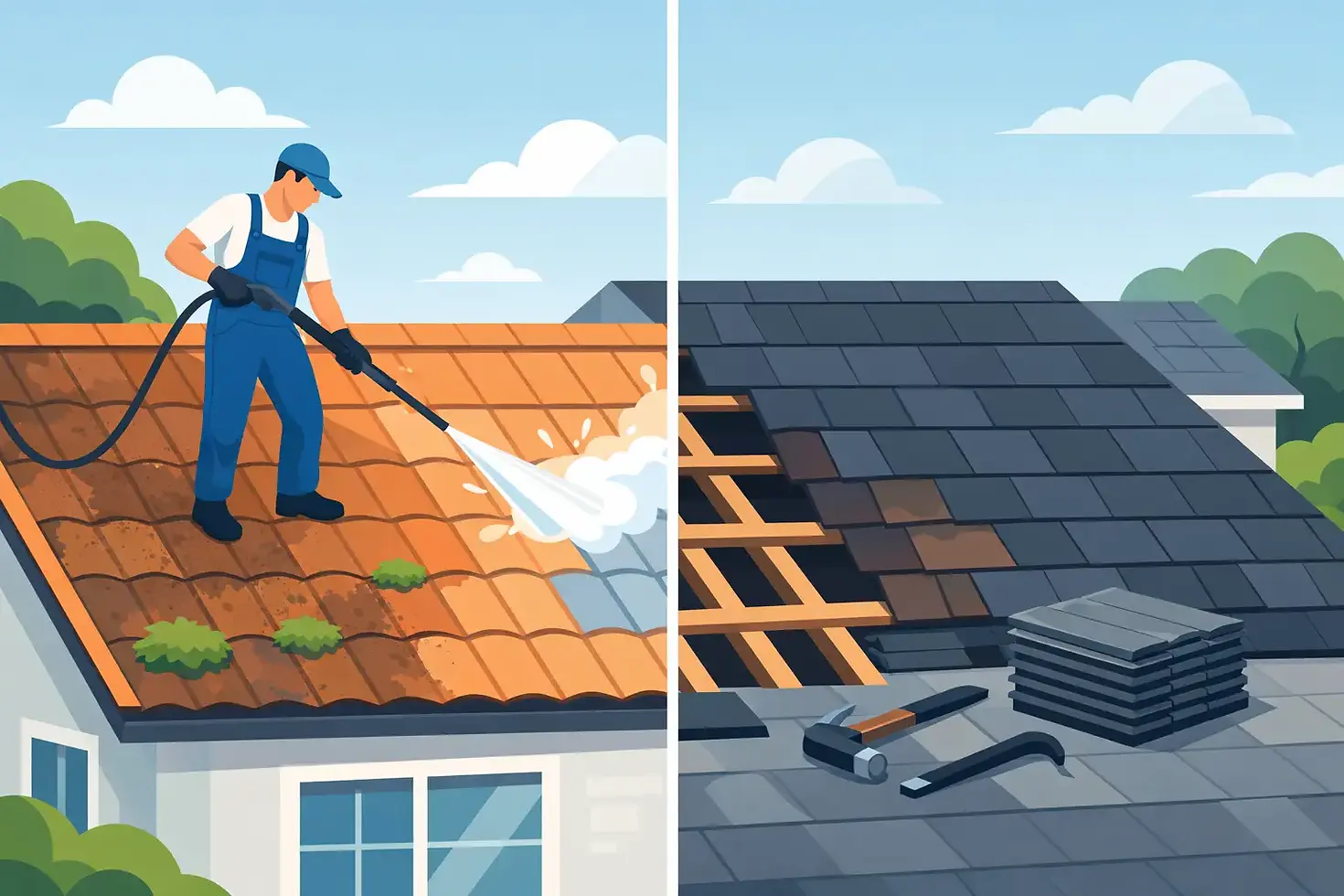
Roof Cleaning vs Roof Replacement

A stained roof can trigger complaints fast. On a multifamily property or commercial site, black streaks, moss, and debris do more than hurt curb appeal - they raise questions about maintenance standards, drainage performance, and whether larger issues are being missed. That is why roof cleaning vs roof replacement is not just a cosmetic decision. For property managers, HOA boards, and facility teams, it is an asset protection decision with budget, liability, and lifecycle consequences.
The right answer depends on what the roof is actually telling you. In some cases, cleaning restores appearance, supports drainage, and extends service life. In others, cleaning a failing roof only delays a capital project that needs to happen anyway. The key is knowing the difference before money gets spent in the wrong place.
When roof cleaning is the right call
Roof cleaning makes sense when the roof is structurally sound but covered with organic growth, dirt, atmospheric staining, or debris buildup. This is common on apartment communities, condo associations, office buildings, and healthcare facilities where shade, moisture, and nearby trees create ideal conditions for algae and moss.
On many roofing systems, the problem starts on the surface. Algae creates dark streaking. Moss retains moisture. Leaves and debris slow drainage and can cause water to back up around roof penetrations, edges, and gutter lines. None of that automatically means the roof is at end of life.
If the membrane, shingles, tile, or coating system remains intact, cleaning can be a smart maintenance investment. It improves appearance, reduces moisture-holding debris, supports inspection readiness, and helps your team see the actual condition of the roof. A dirty roof hides defects. A properly cleaned roof makes evaluation easier.
For managed properties, there is also an operational advantage. Cleaning is far less disruptive than replacement. Tenants, residents, and visitors experience less noise, less staging, and fewer access complications. When the roof still has usable life left, that matters.
When replacement is the better decision
There are times when roof cleaning is the wrong solution, even if the roof looks like it would benefit from it. If the system has active leaks, widespread material deterioration, saturated insulation, cracked tiles in large numbers, failing seams, loose flashing, or repeated repair history, replacement may be the more responsible path.
Age matters too. A roof near or beyond its expected service life should be evaluated with caution. Cleaning may improve the look of the surface, but it will not restore waterproofing performance or structural integrity. For owners and managers responsible for reserve planning, spending maintenance dollars on a roof that is already due for replacement can create a false sense of progress.
This is especially true on large properties where deferred roofing issues can spread into interior damage, mold risk, and resident complaints. A roof that is failing functionally should not be treated as an appearance issue.
Roof cleaning vs roof replacement: what actually changes the decision
The most practical way to evaluate roof cleaning vs roof replacement is to separate surface condition from system condition. Surface condition covers staining, moss, debris, and buildup. System condition covers waterproofing performance, material wear, drainage design, flashing integrity, and the presence of active damage.
A roof can look terrible and still be serviceable. It can also look fairly normal and be close to failure. That is why visual appearance alone should never drive the decision.
For commercial and HOA properties, four variables usually shape the right move. The first is age. A ten-year-old roof with algae staining is very different from a twenty-five-year-old roof with recurring leaks. The second is extent of damage. Is the issue limited to surface contamination, or are there signs of deeper deterioration? The third is budget horizon. If capital replacement is planned in the near term, owners may choose limited maintenance instead of aggressive cleaning. The fourth is risk exposure. Buildings with occupancy sensitivity, high foot traffic, healthcare use, or strict inspection expectations often need a more conservative decision-making process.
Why cleaning is often undervalued
In commercial maintenance, roof cleaning is sometimes treated as optional until appearance becomes a problem. That is a mistake. Preventive cleaning can protect more than curb appeal.
Debris retention increases moisture exposure. Moss can lift edges and create pathways for water intrusion. Blocked drainage areas can accelerate wear around low spots and transitions. On sloped roofing, organic growth can compromise the clean, maintained look that residents, tenants, and boards expect. On flat and low-slope systems, neglected buildup can interfere with routine inspection and hide trouble areas.
Cleaning also supports better planning. When a roof is free of heavy staining and debris, property teams and contractors can inspect seams, penetrations, flashings, and surface wear more accurately. That leads to better repair decisions and fewer surprises.
For portfolios with multiple buildings, this matters even more. Consistent maintenance records and visible roof condition can help managers prioritize projects by need instead of reacting building by building.
Why replacement is sometimes delayed too long
The opposite problem is just as common. Some properties continue cleaning and patching a roof that has already crossed the line into replacement territory. This usually happens because the immediate cost of replacement is high, disruption is a concern, or decision-makers are trying to get one more season out of the system.
Sometimes that works. Often it does not.
The trade-off is that repeated short-term fixes can add up quickly while leaving the core problem unresolved. Meanwhile, leak exposure continues, tenant frustration grows, and emergency repairs start competing with planned maintenance budgets. On occupied properties, that ripple effect can cost far more than the original roofing problem.
A clean roof that still fails under rain or standing water is not a successful outcome. Appearance and performance are not the same thing.
How property managers should evaluate the next step
The best decisions start with a professional condition assessment, not a guess based on photos from the ground. Your team should understand the roof type, approximate age, repair history, drainage performance, visible contamination, and any signs of active failure.
If the roof is fundamentally sound, cleaning should be performed with methods appropriate to the material. Aggressive cleaning can cause damage when the wrong pressure, chemicals, or equipment are used. That is especially important on aging shingles, tile systems, coated roofs, and low-slope commercial assemblies where surface integrity matters.
If the roof shows systemic failure, cleaning should not be positioned as a substitute for replacement. It may still have a role as a temporary measure for presentation or inspection preparation, but it should be framed honestly within a larger replacement plan.
For larger properties and managed communities, coordination matters almost as much as the scope itself. Roof work affects access, resident communication, safety planning, and scheduling around weather and occupancy. That is one reason many commercial stakeholders prefer a maintenance partner that understands property operations, not just the task on the roof.
A practical standard for roof cleaning vs roof replacement
If cleaning will restore function, improve appearance, support drainage, and preserve remaining service life, it is usually a strong maintenance decision. If the roof has widespread failure, chronic leaks, or end-of-life materials, replacement is the better investment.
The gray area sits in the middle, where many real properties live. A roof may still perform but show enough wear that aggressive cleaning is not worth the effort. Or it may need localized repairs and targeted cleaning to bridge the gap until capital work is approved. That is where experienced assessment matters most.
At Outdoor Keepers, that practical mindset is central to how commercial exterior maintenance should be handled. Not every roof needs replacement, and not every dirty roof should be cleaned the same way. The goal is to protect the asset, reduce avoidable risk, and keep the property in a condition that reflects professional management.
For property managers and boards, the best next step is not choosing the cheaper option first. It is choosing the option that matches the roof’s actual condition and the property’s operational priorities. A clear roof tells you more than whether the building looks maintained. It tells you whether your next dollar is preserving value or postponing a bigger problem.


Comments